Foreign Aid Bill Pits Senate Against NGOs As Lawmakers Move To Compel Disclosure Of Foreign Funds
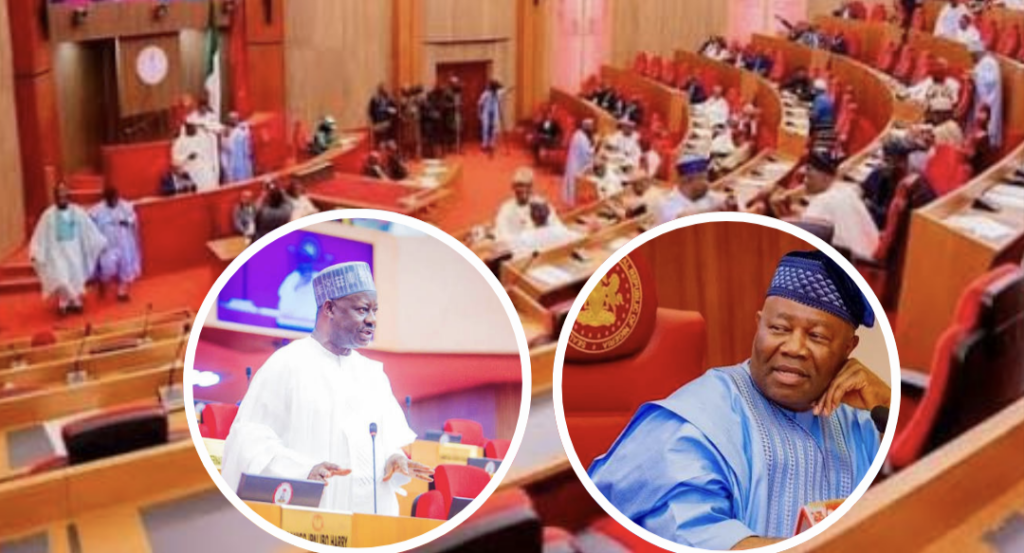
A bill seeking to compel non-governmental organisations, NGOs, to disclose funds and humanitarian aid received from foreign donors has pitted the Senate against civil society organisations.
According to Daily Trust, while lawmakers said the bill aims to promote accountability and protect national security, NGOs fear it could hamper humanitarian operations and shrink civic space.
The bill, titled “A Bill for an Act to Provide for the Regulation, Coordination, Transparency and Disclosure of Foreign Aid, Grants and Donations Received in the Federal Republic of Nigeria; to Ensure Accountability in the Utilization of Such Aid; and for Related Matters, 2026 (SB. 1034),” is sponsored by Senator Ibrahim Hassan Dankwambo, Gombe North.
It was introduced on May 6, 2026, and passed second reading on July 22, 2026. It is now before the Senate Committees on National Planning and Economic Development and Finance for public hearing.
Findings show this is the fourth attempt by the National Assembly to regulate NGOs, after proposals in 2016, 2017 and 2019/2020 stalled at committee stage.
Key provisions:
The bill seeks to establish the Foreign Aid Regulatory Commission, FARC, as an independent body to maintain a central repository of all foreign assistance, demand financial documentation, conduct unannounced inspections and audits, and sanction non-compliant entities.
Section 2 extends regulation to MDAs, state and local governments, local and international NGOs, CSOs and private entities receiving foreign aid including grants, donations, technical assistance, concessional loans and humanitarian support.
Section 6(1) mandates every entity receiving foreign aid to register with the commission within 30 days of receipt. Section 7 requires disclosure of source, amount, purpose, conditions and implementing partners.
Section 10 requires annual independent audits, with copies submitted to FARC and the National Assembly.
Penalties include N5m fine or 5 years imprisonment for individuals, and N20m fine plus suspension or revocation of licenses for corporate bodies.
Senate’s justification:
Dankwambo, former Accountant-General, said billions in foreign aid are channelled to NGOs without adequate scrutiny, posing national security risks.
Senate Chief Whip Tahir Monguno, Deputy Senate President Barau Jibrin, Senators Adamu Aliero and Sani Musa supported the move, with Jibrin saying “We can’t tell what money goes into the coffers of NGOs. Fraudsters set up bogus, pseudo NGOs and collect money from there.”
CSOs kick:
Country Director of Accountability Lab Nigeria, Friday Odeh, said the bill is unnecessary as EFCC/SCUML, NFIU, CAC, ICPC and others already perform similar functions, and warned it could reverse gains that got Nigeria off the FATF grey list in October 2025.
Chancellor of ISSJHR, Dr Omenazu Jackson, asked: “What specific function would this proposed Commission perform that existing government institutions are not already empowered to undertake?” He warned transparency must not become pretext for controlling independent voices.
The Nigeria Network of NGOs, NNNGO, said the National Foreign Aid Register in Clause 8 already exists via the Nigeria Development Cooperation Dashboard run by the Federal Ministry of Budget and Economic Planning, and that the bill fails to distinguish between public government aid and private donations to independent CSOs protected by freedom of association.