Southern Kaduna Killings: You Were In Government, Why Keep Quiet Till Now? Dalung Challenges Defence Minister Musa
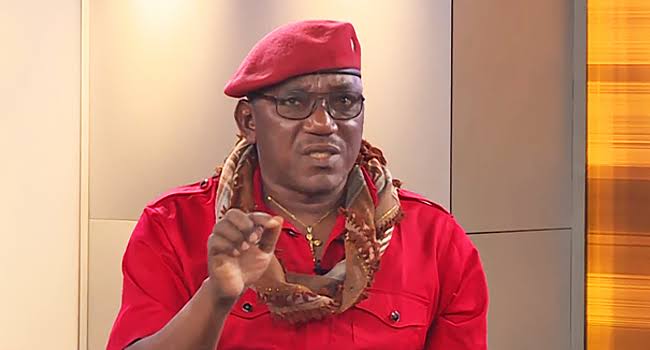
Former Minister of Youth and Sports Development, Solomon Dalung, has challenged the Minister of Defence, General Christopher Musa, to provide concrete evidence to back his allegation that former Kaduna State Governor, Nasir El-Rufai, planned deliberate killings in Southern Kaduna.
Dalung, who spoke on Channels Television’s Inside Sources programme monitored by Northern Nigeria Hub, said the allegation by General Musa is too weighty to be swept under the carpet, as it amounts to an accusation of genocide.
General Musa had recently accused El-Rufai of complicity in the Southern Kaduna crisis.
But Dalung said reducing the Southern Kaduna crisis to El-Rufai alone is the beginning of injustice, noting that Kaduna has witnessed about four to five different crises dating back to the 1987 Kafanchan crisis triggered by interpretation of the Quran, to the Sharia crisis, Zangon Kataf crisis and the 2011 post-election violence.
According to him, the proper origin of what is today referred to as the Southern Kaduna crisis was the 2011 post-election crisis, after which Governor Patrick Yakowa set up a Commission of Inquiry.
“I personally advised him against a Commission of Inquiry but suggested reconciliation. He went ahead and out of about 180 people indicted, 115 were from Southern Kaduna and he could not proceed with the white paper. The report was widely escalated. I was given a copy at a motor park in Kaduna while travelling from Kaduna to Jos,” Dalung said.
He said when El-Rufai came in, he set up a panel headed by General Agwai to advise his government on how to deal with the unresolved issues.
Dalung said it was the Agwai Committee that recommended payment of compensation to all victims, including Fulani who were in transit and were caught up in the crisis.
“Some of them survived and went back to their home countries and decided to mobilise for reprisal which the General Agwai’s committee dealt with. So the payment which was made which is referred now as payment to bandits is an unfair comment on El-Rufai because he never initiated it. It was the General Agwai’s committee that initiated it. Lemu committee which was set up by Jonathan’s government identified the victims,” Dalung said.
He questioned the timing of General Musa’s allegation.
“General Musa should give us concrete evidence because as at the time El-Rufai was doing this, he was a serving military officer and also a commander in the Northeast. Could it be that he had all this information? What did he do? Who did he report to? Why did he choose not to say anything about it? Why did he even keep quiet when El-Rufai left as governor? Why did he choose now to tell us the story?” Dalung queried.
On whether El-Rufai mismanaged Kaduna’s diversity, Dalung said he is not a fan of El-Rufai and was very critical of his style while he was governor.
“No one will exonerate him from answering the question of responsibility because it happened under his watch as governor. His poor management of communication of issues that affected Southern Kaduna people actually contributed to the perceptions people hold against him,” he said.
He accused El-Rufai of reckless land administration, pulling down people’s properties without due process or compensation.
Dalung recounted how former President Muhammadu Buhari once complained to him about El-Rufai’s demolition spree.
“He said, ‘Can you look at what the governor of Kaduna State has done? Imagine him demolishing a house that was older than him.’ He said he had just called him to tell him to discontinue because that house is older than him and so the papers are older than his age,” Dalung said.
On the international dimension, Dalung said El-Rufai is self-opinionated and stepped out of municipal laws, which attracted petitions from international organisations when he was nominated as minister, detailing human rights violations.
He also spoke on the 2015 Zaria clash involving Shiites and the military, saying it was one of the saddest moments of his life as he knew Sheikh El-Zakzaky personally.
Dalung said he confronted the then Chief of Army Staff, General Tukur Buratai, asking why he had to open a new crisis front for the government.
“He told me the issue was an institutional issue because his generals insisted that we must pass through that road. At that point it was beyond my control and command,” Dalung quoted Buratai as saying.
He, however, faulted the military’s return to demolish El-Zakzaky’s house, which he said involved both the military and Kaduna State government.