“No Politician Can Swear On Holy Book To Bring Back Fuel Subsidy” — Shehu Sani Slams Atiku, Says Governors Should Be Blamed For Hardship
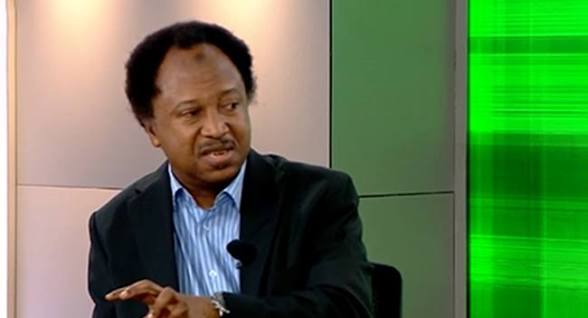
Former Senator representing Kaduna Central, Shehu Sani, has declared that no politician can swear on the Holy Book to bring back fuel subsidy, describing promises to reinstate it as an impossible political deception.
Former Senator representing Kaduna Central, Shehu Sani, has described promises to reinstate fuel subsidy as an impossible political deception aimed at deceiving voters, insisting that Nigeria’s refinery failure is deliberate and sustained by powerful cabals across ruling and opposition parties.
Speaking in an exclusive interview with ATP Hausa, Sani said Nigeria has no excuse for non-functional refineries when war-torn countries kept theirs working.
“Look at Iran. Despite all the wars, their refineries are working. Look at Iraq during Saddam Hussein, despite all the wars, their refineries were working. Look at Libya during Gaddafi, despite the war, their refineries were functional. Why should ours in Nigeria not work?” Sani said in Hausa.
“What our leaders prefer most is to take crude abroad. Even as I speak to you now, there are people in court because they enriched themselves through subsidy.”
He said the secrecy around subsidy made it impossible to name beneficiaries, noting that wealthy businessmen tied to government and opposition frustrate local refining.
“There is no reason why a country like ours with crude oil wealth should have people suffering over fuel. There is no desire to detach fuel subsidy in Nigeria because of some wealthy businessmen who have links with government and even those in opposition who are aspiring to take power,” he said.
On Atiku’s Promise To Restore Subsidy
Reacting to the proposal by PDP presidential candidate Atiku Abubakar to restore subsidy, Sani dismissed it as unprincipled and unrealistic.
“Atiku’s plan is not a realistic objective. Saying you will be exporting our crude, importing petrol, paying and taking money and sharing to some businessmen in the name of subsidy, that is not based on principle,” Sani said.
He argued that subsidy payments were drawn directly from Nigeria’s treasury and had crippled the economy before removal.
“By the time Buhari left, Nigeria was owing unpaid subsidy claims. We were in heavy debt. Before leaving, Buhari removed subsidy, and it was excluded from the 2023 budget,” he said.
“Currently, we are paying 40% of our revenue as debt. At the time we were paying subsidy, 27 states could not pay salaries. At that time, Nigeria had 163 million people in poverty.”
Sani listed critical questions any president must answer before restoring subsidy:
“What is the price of crude at the time you assume office? How much will you draw from the treasury to pay subsidy? After paying, how much will remain? Will what remains pay salaries and other projects?”
He added: “If anyone says he will restore subsidy now, it’s not that you just assume office and get excited and say you will bring back subsidy tomorrow. That’s not how it is done.”
“What he said is political talk. As a politician myself, when you are doing politics and wooing people to vote for you, there is nothing you will not tell them. Only when you assume office and check what is inside, you see there is a problem, it is not possible. Then people will start saying ‘we have been deceived’ and at that time it is of no use.”
“Anyone who knows oil business and education in this area knows it is a political promise. But every politician has the right to make his promise, but the promise is one that is not possible. I don’t think there is any politician who will swear on the Qur’an that ‘I will bring back fuel, if I don’t, whatever Allah will do to me…’ Nobody can say that because it is not true, it is politics.”
On Naira Devaluation
On the floating of the Naira, Sani said previous exchange rates were artificial.
“Regarding Naira value, those with knowledge know Naira was also subsidized. That subsidy is why you were getting Dollar at N400 or N500, because that is not its value. Its real value is to allow it to float against any currency in the world — whether Pound, Dollar, or Euro. Today it rises, tomorrow it falls.”
“In the past, Nigeria’s money was used. When you hear ‘Dollar was N200’, it wasn’t N200, government was secretly paying you the remaining money. And that money being paid to you should have been used to build schools, hospitals, roads.”
He however warned against harsh economic shock therapy:
“In a country like ours, you should not take a ‘Shock Doctrine’ ideology and just place it on people saying the economy will be fixed in future, while people need life first to reach tomorrow.”
Where Did Subsidy Money Go?
Sani said the real question is accountability of savings from subsidy removal.
“Since subsidy was removed, where did the money go? How much was shared to states? How much more did Northern Nigeria get? How much was sent to lawmakers? How much was sent to local governments?”
“The money was taken from one account to another, and the North got a large share. If people did not benefit in terms of development, it is not Tinubu’s fault — it is the fault of governors, lawmakers, local government chairmen and politicians around these things. Not to say it is the President, because the money removed from this box was taken to that box, which the North got a large share of,” he concluded.