“TINUBU Cannot Call This Reform” — Atiku Decries ₦796.4bn Collapse In Agric Trade, 33.3% Drop In Exports
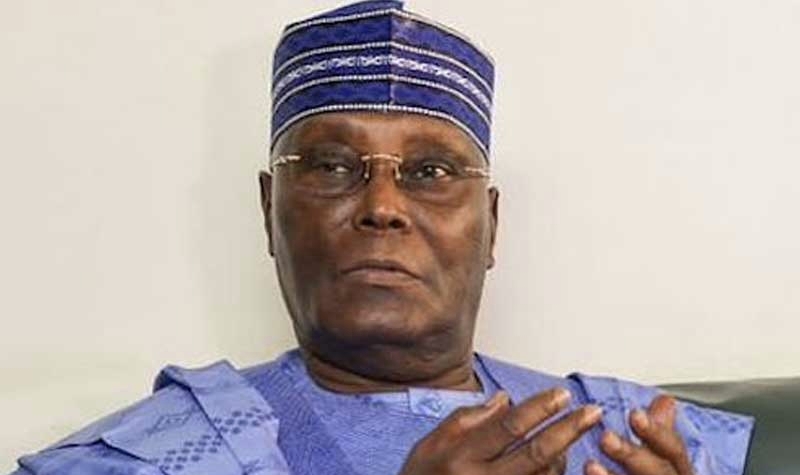
Former Vice President and presidential candidate of the African Democratic Congress (ADC), Atiku Abubakar, has criticised the Federal Government over the collapse of Nigeria’s agricultural trade balance, saying the country is losing export earnings while farmers and manufacturers struggle with insecurity and high production costs.
Atiku said the value of Nigeria’s agricultural trade moved from a ₦740.27 billion surplus in the first half of 2025 to a ₦56.13 billion deficit in the corresponding period of 2026 — representing a ₦796.40 billion reversal within one year.
He spoke in a statement issued on Wednesday, October 7, 2026, by the Director of Strategic Communication of the ADC Presidential Campaign Council, Mr Phrank Shaibu.
According to Atiku, agricultural exports declined by 33.3 per cent during the period, while imports also fell but at a slower rate, showing the problem was not over-importation but a collapse in what Nigeria sold to the world.
” Tinubu cannot call this reform when the people who grow our food and the businesses that should process it are being squeezed from both sides,” Atiku said.
“The excuse that Nigerians simply imported too much will not stand. Tinubu’s government must answer for the collapse in what Nigeria sold to the world. The country is losing export earnings, and the President owes farmers, workers and businesses more than another speech about prosperity,” he added.
He listed insecurity on farmlands, high cost of moving produce, high energy costs for processing plants, and lack of incentives for value addition as core challenges confronting farmers and manufacturers.
“What has his administration done to make it safer to farm, cheaper to move produce, easier to keep a processing plant running or more profitable to sell a finished Nigerian product? Farmers cannot cultivate promises. Manufacturers cannot power factories with speeches,” Atiku queried.
Atiku said Nigeria’s agricultural exports have remained largely raw commodities — cocoa beans, cashew nuts and sesame seeds — as shown in National Bureau of Statistics (NBS) foreign trade reports, meaning Nigeria exports jobs and retains little value.
“We grow the crop. Someone else does more of the processing, builds a business around it and earns the larger return. Then Tinubu speaks of jobs while Nigerian factories struggle to compete,” he said.
“A trade deficit alone does not explain every problem on our farms. But after more than three years in office, the President owns the decisions that have left farmers exposed and producers burdened,” Atiku stated.
The ADC presidential candidate linked the agricultural crisis to his proposed production subsidy policy for petroleum products refined locally.
Under the proposal, he said, only products refined in Nigeria, including those produced by modular refineries, would receive support, while imported products would not qualify. The subsidy, he said, would be capped, budgeted and independently audited, with mechanisms to track whether savings were passed to consumers and businesses.
He also criticised the Federal Government’s Compressed Natural Gas (CNG) initiative, arguing that the high cost and unavailability of conversion kits had limited its benefits.
“Local refining is about more than the price at the petrol pump. Aviation fuel affects fares. LPG affects the cost of cooking. Petroleum products and feedstocks affect industries and the people they employ,” he said.
Atiku promised that an ADC administration would pursue a deliberate policy of domestic production and processing.
“My administration will begin restoring a transparent production subsidy from Day One. We will back farmers and processors with the same determination. Grow it here. Process it here. Refine it here. Create the jobs here. Make life affordable here,” he said.
He accused the Tinubu-led government of leaving Nigeria overly dependent on the export of raw commodities and crude oil while consumers continued to bear the cost of finished products.
The Federal Government has, however, maintained that its economic reforms are intended to strengthen domestic production, attract investment and create conditions for sustainable growth.
The latest NBS data also show that Nigeria’s real GDP grew by 3.89 per cent year-on-year in the first quarter of 2026, while manufacturing grew by 3.29 per cent in real terms during the same period.