Canadian Teen, 15, Blackmailed Over Nude Photo Traces His Nigerian Scammer To Lagos — “He Called Me His Slave”
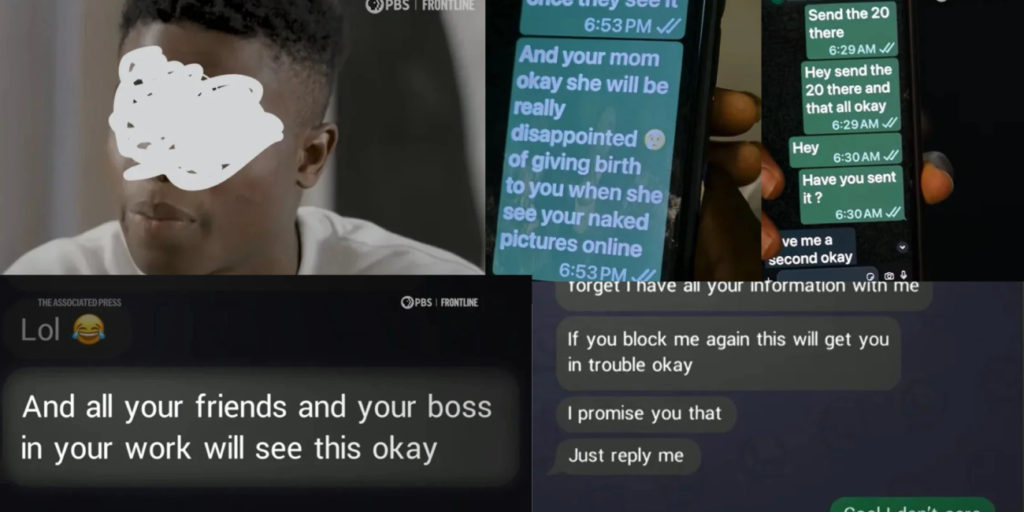
A Canadian teenager who was blackmailed after sending a nude photo to someone he thought was a girl has come face to face with his tormentor in Lagos, Nigeria, an investigation by The Associated Press (AP) has found.
The scammer, a soft-spoken Nigerian student identified only as Ayomide, is in his early 20s, not much older than his victim. He is part of a thriving subculture of online fraudsters known locally as Yahoo Boys.
“Scamming is not good,” Ayomide told the reporters. “I do feel bad. But as a man, you have to make money.”
The AP does not publish the names of underage victims. It contacted the Canadian after he turned 18, and he spoke on condition of anonymity.
The teen was caught in sextortion, a scam that increasingly targets young men and boys: criminals threaten to expose private images unless the victim pays. The FBI has warned of a surge in financially motivated sextortion of minors, and this year is on track to be the worst on record.
By August, the US National Center for Missing & Exploited Children (NCMEC) had received more than 40,000 reports of financial sextortion, compared with about 50,000 for all of last year. Dozens of young people have taken their own lives after being sextorted.
Researchers at the University of Wisconsin-Eau Claire and Florida Atlantic University found that the share of US middle and high school students who say they were sextortion victims has tripled in a decade, to nearly 15 per cent.
They also found that sextorted teens are nine times more likely to attempt suicide. According to cybersecurity analyst Paul Raffile, more than 60 teenagers under 18 worldwide have killed themselves after being financially sextorted since the end of 2021.
How “Ava” trapped him
The Canadian said he was 15 when an account called “Ava” followed him on TikTok. He got around the platform’s ban on direct messaging for under-16s by entering a false birthday when he signed up.
Ayomide, posing as Ava, sent him a nude photo copied from the internet, then asked for one in return. The teen sent it. Ava also asked for a copy of his learner’s permit, which gave Ayomide his address and date of birth.
The demands for money started about a week later. The teen said he paid $500 at first, but Ayomide kept demanding more.
“I had no hope in my existence,” the teen said, describing nights of crying and isolation. He was too afraid to tell his family. “He would call me his slave.”
Ayomide, who shared chat histories with the reporters, said he used fake accounts to approach hundreds of foreign men and boys on TikTok before moving conversations to encrypted apps.
He collected payments through gift cards and PayPal accounts opened by money mules.
Ayomide claims he took a few hundred dollars from the teen. The victim says it was closer to $2,000. Neither had full records, and the AP could not verify either figure.
Why scamming is normalised
Scamming has been normalised in parts of Nigeria, where more than 90 per cent of workers lack stable, formal jobs, the report said. Songs celebrate Yahoo Boys, and social media videos present defrauding wealthy Westerners as a route to quick riches.
Adedeji Oyenuga, a criminology professor at Lagos State University, said: “There’s no shame in being a Yahoo Boy. There is pride.” He said some parents push their sons into “Hustle Kingdoms,” groups of young men who live and work under an experienced scammer who takes a cut, while others marry their daughters to fraudsters. “For the parents it’s poverty,” he said.
Ayomide said his parents sell clothes in a local market. He is studying computer science, works at a barbershop and said he must find 110,000 naira ($82) for school fees and 250,000 naira ($186) for rent. He said he would rather cut hair than scam and dreams of becoming an engineer who works on planes. He had vowed to quit within a year but, a year later, had joined other Yahoo Boys at his university. He declined to say why he is still scamming.
Pastor Lateef OgoOluwa Bakre, who has ministered to Yahoo Boys for two decades, linked the trend partly to the legacy of colonialism. “A lot of us believe that the colonial masters cheated on us,” he said.
Some scammers also turn to spiritual rituals, a practice known as Yahoo Plus. The reporters visited Akeem Olajide, an Ifa diviner in Owode Egba, northeast of Lagos, who said Yahoo Boys pay him for rituals meant to bring wealth.
Platforms, EFCC respond
The investigation also examined how platforms are used. Apple said it removed the gift-card resale app CardBrother from its store this year after linking it to another account engaged in fraud, and Google removed the app after the AP flagged a fictitious US address and a dead phone number. Steam said it is phasing out physical gift cards partly because of scammer abuse.
PayPal said it restricted the three accounts Ayomide used shortly after they were created.
Child safety advocates say privacy changes are making teens more vulnerable. Data from Canada’s Cybertip.ca hotline shows reports of financial sextortion on TikTok rose sharply after the platform expanded direct messaging and image sharing last year.
The Chairman of the Economic and Financial Crimes Commission (EFCC), Olanipekun Olukoyede, told the reporters that “Nigeria is no longer going to be a safe haven for fraudsters.” He has called Yahoo Boys a “national shame.” He admitted corruption exists, saying he would not claim that every staff member “is a saint,” but insisted offenders are sanctioned.
Two other scammers told the reporters they had been arrested by police but paid bribes and were released.
After months of payments, the teen decided to send one last payment, tell Ayomide to delete everything, and then stay silent. Ayomide sent more than 100 WhatsApp messages over 11 days. The teen did not reply.
Ayomide said he never posted the picture and that scammers leave victims alone if they stop paying. The FBI and child safety groups say ignoring sextortionists is the best response, and urge young people to tell a parent, teacher, friend or hotline and report the crime.
“If kids pay, the threats inevitably continue,” said Lindsay Lobb of the Canadian Centre for Child Protection. “These people are only looking for money. They are not interested in sharing your image.”
Nearly two years later, the teen says he is still haunted by the ordeal. He was recently targeted by another scammer posing as a Japanese woman, but this time he refused and blocked the number.
Ayomide said he would apologise if he could. The teen is unmoved. “I doubt he felt bad,” he said.