Don’t Convict Senator Buba Because He Understands People We Failed To Understand — Dalung Warns
Former Minister Defends Senator Shehu Buba, Says Proximity To Enemy Is Not Loyalty To Enemy
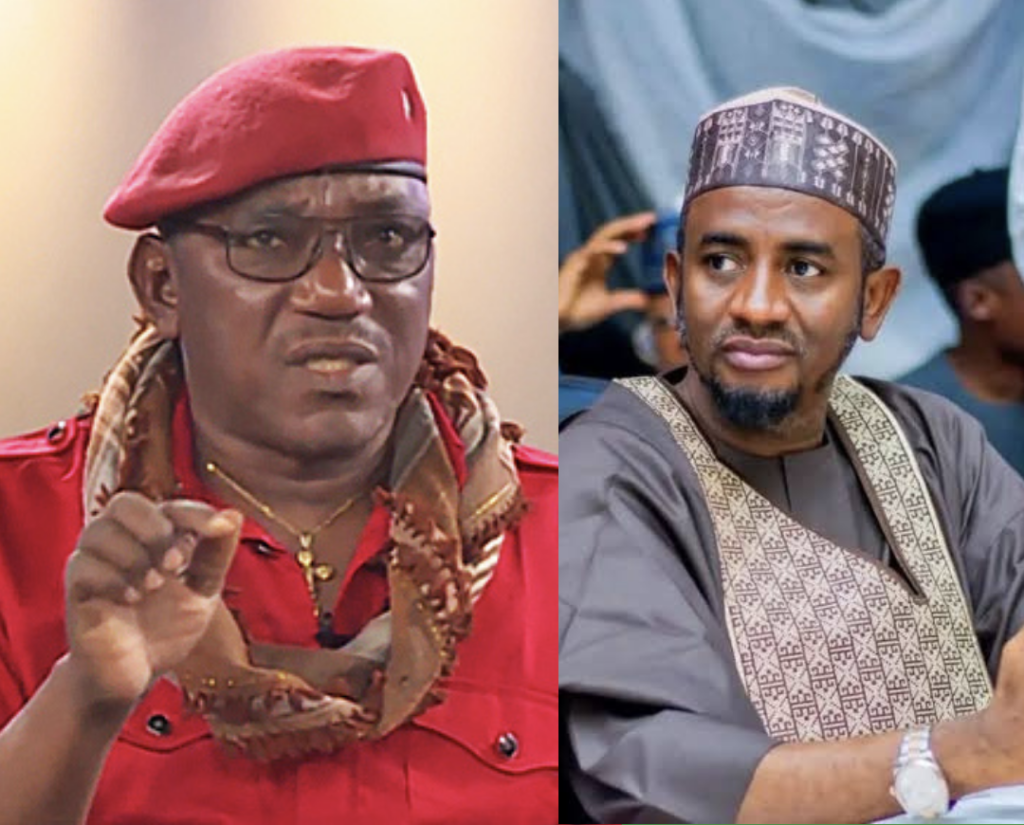
Former Minister of Youth and Sports, Solomon Dalung, has waded into the controversy surrounding Bauchi South Senator, Shehu Umar Buba, saying Nigerians have formed opinions about a man they hardly know.
Dalung was reacting to a recent investigative piece by TheCable titled, “The Insider: Shehu Buba, the maverick senator who is loved and loathed in security circles.”
In a statement posted in his Facebook page, Dalung said the report is revealing, not because it absolves Buba of every allegation, but because it exposes a side of his life largely missing from public conversation.
“Shehu Buba is a Fulani nationalist. He has never hidden that identity. He has spent a good part of his life working for the advancement of Fulani communities, particularly in education and the search for peaceful coexistence. But there is a difference between being a Fulani nationalist and being a defender of criminality. That distinction is being deliberately blurred,” Dalung said.
Dalung noted that Buba’s background, language, contacts and knowledge of pastoralist communities enabled him to reach places government officials could hardly reach, a value the security establishment reportedly relied on.
“He was brought into the investigation of the Abuja-Kaduna train attack. His name reportedly came up in hostage negotiations. And according to the article, a senior security official even wanted President Bola Tinubu to acknowledge his contribution to the rescue of the Kuriga schoolchildren,” he said.
According to Dalung, the same qualities that made Buba useful to the state are now being used to raise suspicion against him.
“He knows the Fulani community. He has access to people in places where security agencies have struggled to operate. He can speak to people others cannot easily reach. But since when did knowing a community become evidence of complicity in the crimes committed by some members of that community?” he queried.
Drawing from personal experience, the former minister recalled his involvement in efforts to negotiate the release of the Chibok girls at the height of the Boko Haram insurgency, where the insurgents named him as one of the few people they could trust to mediate.
“Some people who saw my name around those negotiations went to town with another story: that I was a sponsor of Boko Haram. Imagine the absurdity. The very fact that you are trusted enough by people holding innocent girls in captivity to sit across the table and negotiate their release can suddenly be presented as evidence that you are one of them. I experienced that myself,” Dalung recounted.
He added that his time in the cabinet of former President Muhammadu Buhari also involved dialogue with actors in the Niger Delta to resolve attacks on oil infrastructure, noting that government cannot solve every security problem by sending soldiers.
“Sometimes somebody has to talk. Sometimes somebody has to listen. Sometimes somebody has to enter a space where the government itself cannot easily enter. And that person will inevitably have access to people who may later become suspects, informants, negotiators or even enemies of the state,” he said.
Dalung warned that photographs, recordings and private conversations secretly taken by people Buba may have worked with could be weaponised during political disagreements or blackmail attempts.
“That is precisely why intelligence work and conflict resolution cannot be judged by photographs and fragments alone,” he said.
He, however, said Buba should not be beyond scrutiny.
“If there is evidence that he sponsored, financed or facilitated criminality, let the security agencies investigate it and let the courts determine his culpability. But if the evidence is simply that he knows people, talks to people, has access to communities and has been useful to security agencies, then we need to be very careful about the conclusions we draw,” Dalung stated.
He stressed that Buba’s Fulani identity should not become evidence against him, arguing that a Fulani man can be a nationalist without being an enemy of Nigeria.
“A Fulani man can be a Fulani nationalist without being an enemy of Nigeria. He can fight for the education and welfare of Fulani children without defending bandits,” he said.
Dalung concluded that the senator’s access is being presented as complicity, his relationships as evidence, and his identity as motive.
“I am not writing this as somebody who believes politicians should be protected from scrutiny. I am writing it as somebody who understands that proximity to an enemy is not the same thing as loyalty to the enemy. In security work, sometimes you have to know the man in the bush before you can bring him out of the bush.
“Shehu Buba should answer legitimate questions. His accusers should also provide evidence. But let us not convict a man because he understands the people we have failed to understand,” he added.