“It Is A Sign There Is A Plan To Scatter The Opposition And Dictatorship May Prevail” — Ex-DSS DG Lawal Musa Daurawa On Court Nullifying Atiku’s Candidacy
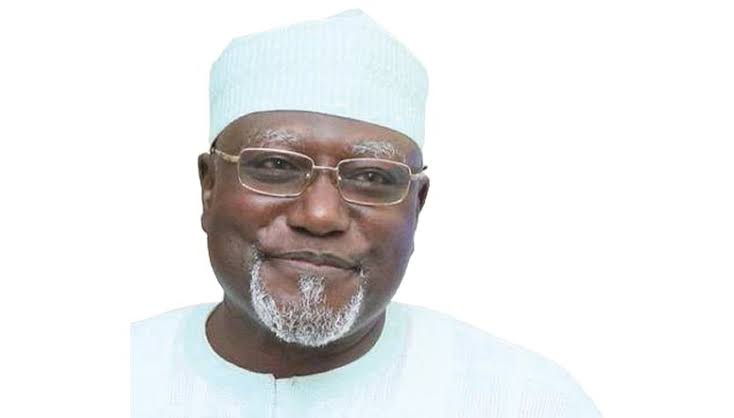
Former Director-General of the Department of State Services (DSS), Lawal Musa Daurawa, has warned that the Federal High Court judgment nullifying the candidacy of former Vice President Atiku Abubakar could be a sign of a plan to scatter the efforts of the opposition and allow dictatorship to prevail, throw the polity into confusion and cause political crisis.
Speaking in an interview with DCL English on the judgment, Daurawa also warned against judicial interference, reckless political rhetoric, and elections decided by courts instead of ballots.
Asked how he views the Federal High Court judgment nullifying Atiku Abubakar’s candidacy, as a former Director-General of the DSS and a politician in Nigeria, Daurawa said:
“Uh well, let me make an impression. Yes, I play politics, but I’m yet to accept to be described as a politician. Because I’m a little bit worried about the connotation of ‘politician’ in Nigeria within the Nigerian context. Normally people associate politicians with deceit, lies, and things that are not really very good. So that’s why I say I play politics, but I’m yet to accept to be given the tag of a politician.”
“Now coming back to your question, I should look at it, I mean I’m supposed to look at it from two angles. One as a, you know, a former official of the intelligence service and then maybe the other way to look at it from the perspective of somebody who plays politics.”
“The first one, I think we are looking… I mean, I’m looking at it as something that is an issue which is brought before the court. And the court has given its verdict. And obviously, given between two parties, one must not accept it and one would be happy with it. And in this case, the opposition party, the ADC, even to some extent even other opposition parties, are not very comfortable with the verdict.”
“But like I said, it is something that is before a court of law. And there are opportunities to appeal, and not only to appeal, maybe even the outcome of the Court of Appeal can also be taken up up to the Supreme Court. So we should allow that process to continue. Because you know, you have to respect the law of the land and you have to respect the opinion of the courts until maybe all the channels are exhausted.”
On the political angle, he said:
“Of course, as a politician [playing politics], I’m not very comfortable, because it is like a sign that maybe there is a plan to scatter, you know, the efforts of the opposition, and then maybe dictatorship may prevail. And which I believe it will not be very undemocratic, and of course lack of respect for democratic principles can throw a polity into some kind of confusion or political crisis.”
“So I will maybe conclude in this answer by saying well, let the courts try to be very, very fair with the trial and the judgment, and then of course on the side of the opposition parties we should also be very careful not to do things that will endanger either our parties or even the democratic principles as they are supposed to be enjoyed by all of us in this country.”
Asked about the accusation by some prominent ADC figures that President Bola Ahmed Tinubu and his administration were behind the judgment, although the government has denied interfering in judicial matters, and what impact such allegations could have on Nigeria’s national stability, Daurawa said:
“Well, the allegation is a very serious one. But I think, uh, they say he who alleges must prove it or give proof or evidence. I think maybe it may be an overreaction. But of course, government has a duty to show more transparency and allowing for the independence of the judiciary, just like maybe the legislature too has its own independence, so also the executive.”
“So the three arms of government are supposed to be semi-independent, but of course the three of them form government. So, the judiciary as independent and they are supposed to be part and parcel of government. And whatever they do can have far-reaching implications on governance. So also the other arm.”
“So my advice is that yes, let the courts be as transparent as possible. And let the government also try not to do anything that will make any opposition member or party to suspect that government is behind any trouble that might befall them.”
“If that one is done, the maybe the last thing is to maybe caution politicians, not just opposition politicians or politicians from making reckless statements that can endanger the polity or pave the way for possible political crisis.”
Asked what early warning signs security agencies should be looking out for regarding this development to prevent a possible breakdown of law and order, he said:
“Uh well, I don’t know what you mean by early warning. But generally, what we do — not necessarily during elections, but anytime, you know — that’s our job: to always put the country in perspective, you know, look at all its aspects, facets, and everything in life. And then see and make sure that things are going normal. And where we detect or suspect any abnormality, we’ll try to investigate it and confirm whether yes, there is something there, no, there is nothing.”
“This is the job and it doesn’t wait for any political season or whatever; it is like that all the time. And I think what we normally do, especially you know in the election season like this, is to try and engage all principal stakeholders: the electoral body, security agencies. They always meet, discuss, and then be abreast with developments leading to the election before it actually takes place.”
“Also, the security agents among themselves, they always sit, discuss, and then make sure they are really adequately ready to face the election. And then of course, even the representatives of the law… because sometimes the various offices of the Attorney General in the states or maybe even that of the Federation are always in contact with security agencies and even sometimes the judiciary so that at least they should avoid any pitfall that can cause some concerns before, during, and even after the election.”
Asked where the line should be drawn between a politician’s right to express dissent and statements that could constitute a threat to national security, following the strong statement by Dino Melaye and some other prominent ADC figures about the possibility of conducting an election without their candidate Atiku Abubakar, Daurawa said:
“Well, generally the saying goes like this: that the right of an individual terminates or stops at the very point where the right of another individual begins. So citizens are always advised to know their rights and their limits.”
“So also political comments, you know, during election season — all politicians, not necessarily opposition politicians, including the politicians that are in government, in power — should all be very cautious not to make reckless statements or statements that may provoke some actions and then at the end of the day cause some kind of crisis.”
“And parties have a duty to call on their members and their candidates to abide by the rules of the law. So also government has a duty to also warn the electoral body to be as transparent as possible. Let each stakeholder be satisfied that things are being done in accordance with the law, and that nobody is trying to short-change anybody.”
“So that way, the level of transparency can really reassure all politicians — whether in the opposition or in power — that yes, things are going the way they should. But where some things are happening which seem not to be understood by the public or even by the political class, then there is some kind of concern, because that will make them start making all sorts of interpretations that can lead to a crisis.”
Asked how, during his tenure as DSS DG, the agency distinguished between heated political rhetoric and statements that could cause a genuine security threat or trigger violence in the country, he said:
“Well, first of all, it’s a job we do, I would say all year round, not necessarily election season. But then threat assessment is also a continuous thing, daily, 24/7 as they used to say. You have to really always look at the situation, appreciate it, re-appraise it, so that you are comfortable with what you are seeing. Where you detect an anomaly or suspect it, you quickly move in, investigate it, maybe discreetly, or sometimes it might not even be discreet. But the whole thing is to make sure that there is nothing that can happen which will bring some kind of untoward development in the country.”
“Number two, we always also interact, especially when issues are official and they are known. This is not an investigation; the fact that we need to assist INEC to make sure it does its job the way the law says it should happen, it’s a duty. So for the security agencies, always duty-bound to do what will facilitate the electoral body to discharge its duties. So also the security agencies, law enforcement like the police, are also supposed to be always in touch with the political class so that they make sure their conduct and utterances do not in any way infringe on the law or create a threat that may endanger the polity.”
Asked what three key measures he could take if he were DSS DG today to prevent the political and legal dispute from escalating into violence, while at the same time ensuring that the rights of opposition parties are not violated, he said:
“Well, I think the answer may be simple, maybe difficult, but I will just tell you the simple one. That is, we will just keep on engaging all stakeholders. Engagement here means looking at their expectation, their role, and what have you, to make sure that yes, we are on the same page. We understand what their concerns are, and then where possible, do whatever to remove that apprehension.”
“So also maybe we engage with the electoral body, then we engage with ourselves — the police, with other security agencies — to make sure that yes, we are all in tandem with the way to enforce the law, maintain law and order, or whatever. So this is what one should do all the time. I think it’s not just to wait until election period, no. But normally we do it all the time, but when it comes to election, it calls for special attention because it’s something that involves almost everybody in the country.”
Asked what impact conducting an election while the legal dispute remains unresolved could have on public confidence in the electoral process and the credibility of the election results, he said:
“Oh, definitely it affects the credibility of our elections, and it also affects the confidence we will have on the government that is formed out of that kind of fallout. So I think even the electoral act has tried in a way to make sure that all electoral disputes are settled before the swearing-in of whoever is supposed to be the winner of that election.”
“Because normally in the past, somebody may be in office for six months, for nine months, for one year, or even more, and you hear that the court will just come and remove the person. It really creates tension, and it gives the impression that elections in Nigeria are not decided by the ballot box, rather it is decided by the courts. And wherever in the world you claim to be playing democracy, actually the court has little or no business in who gets elected and who doesn’t get elected.”
Asked what message he has for Atiku Abubakar, ADC leaders, the federal government, and security agencies regarding the developments, Daurawa said:
“Well, my advice to His Excellency Atiku Abubakar is to stick to the courts. Thank God at least the appeal court is there, and I learned that they have filed or they are preparing to file that appeal. And then of course, even after the appeal court, there is a Supreme Court. So, I will advise that let ADC stick to that.”
And then of course I will advise that the judiciary should try to expedite action on it, because time is of essence. Going to the polls while somebody is still in court — how are you really going to handle this? On the one hand, the electoral body stands the chance of being accused of disenfranchising the person, or even all those who may want to elect him. On the other hand, it is not good again to go into the polls when there is a court case hanging. So I will advise that let this issue be expeditiously treated and let it be done with.”
“On the part of opposition parties, I will say we are equally worried or even more worried. Because if this thing is allowed to go the way it is quietly without any resolution, it may affect all of us, and definitely we will not want that to happen. But for those who are making statements that are not really proper, I think they should be advised or cautioned. Because there are some statements that if made recklessly, they can really ignite some very bitter action.”
“And in Nigeria today, this is the last thing that we can even expect anybody to try to do. We need peace, we want peace. And looking at even the prevailing economic situation where some cannot even afford a meal a day, if you create a crisis, maybe so many people will even die of hunger before you even fire a shot against them. So, I think this is my advice: we should tread carefully, intensify our prayers, and be resolute to make sure that all stakeholders play by the rules — INEC, the judiciary, law enforcement, and the political class.”