“All Indicators Have Shown That Nigeria Is Recovering Economically” — Sheikh Gumi Gives Bold Verdict On Tinubu’s Reforms, But Warns Poor Must Not Be Left Behind
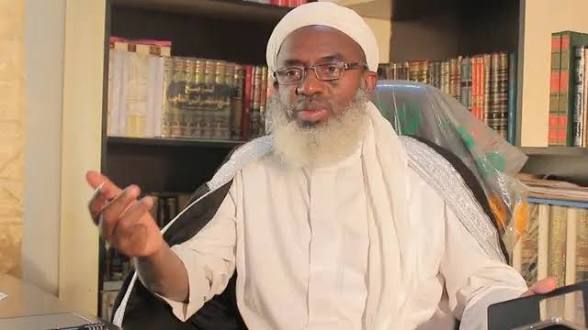
Renowned Islamic cleric and scholar, Sheikh Dr. Ahmad Abubakar Mahmud Gumi, has declared that “Nigeria is recovering economically,” endorsing the fundamental policy direction of the Tinubu administration while urging it to do more to cushion the effects of its reforms on poor and vulnerable citizens.
Sheikh Gumi made the observations during a recent interview with Umar Isa Dandago on The Political Advantage Platform (PAP Show). He offered what could be regarded as one of the most balanced assessments of the Tinubu administration’s economic policies, acknowledging the gains recorded at the macroeconomic level while drawing attention to the hardships still confronting ordinary Nigerians.
His verdict was particularly significant because it came against the backdrop of widespread public complaints about rising costs of living, expensive transportation, food inflation and the general pressure on household incomes.
Rather than dismissing these concerns, the Islamic scholar acknowledged their reality but argued that they should not obscure the positive economic indicators emerging from the government’s reform programme.
His position was unmistakable: the economic reforms are fundamentally sound, the country’s economic indicators are improving, and Nigeria is moving in the right direction. The major shortcoming, in his estimation, is the inadequacy of social protection measures designed to ensure that the benefits of economic recovery reach the downtrodden.
Asked how he reconciled the government’s claims of declining inflation and economic growth with the hardship experienced by millions of Nigerians, Sheikh Gumi explained that the country’s economic circumstances and the composition of its workforce must be considered.
He argued that the measures introduced by the Tinubu administration were not arbitrary decisions but policies consistent with established economic recommendations. He specifically cited the removal of petroleum and electricity subsidies, noting that these were among the difficult but necessary measures recommended by economists and welcomed by international financial institutions, including the International Monetary Fund (IMF).
Sheikh Gumi’s assessment of the results was equally direct. “All indicators have shown that Nigeria is recovering economically,” he declared.
He pointed to the country’s gross domestic product growth of approximately four per cent, describing it as significant for a developing economy. He also drew attention to improvements in foreign reserves and increased allocations from the Federation Account Allocation Committee (FAAC). These, he argued, were important indications that the economy was gaining strength.
However, Sheikh Gumi acknowledged that while the economy might be improving at the highest level, many Nigerians were still bearing the immediate consequences of the adjustments. His prescription was an expanded and more effective social safety net.
He maintained that the government was making efforts through poverty alleviation programmes and other interventions, but insisted that the scale of such interventions remained inadequate compared with the needs of the population.
For Sheikh Gumi, the question was not whether the Tinubu administration had introduced social protection measures, but whether the volume of resources allocated to them was sufficient to make a meaningful difference. His argument was particularly compelling in his emphasis on education as the foundation of sustainable economic development.
Drawing inspiration from the educational philosophy associated with the late Chief Obafemi Awolowo, he argued that Nigeria had become sufficiently wealthy to guarantee free basic and secondary education for every Nigerian child.
“No Nigerian should be left behind in school,” he insisted, adding that no father should have to endure the financial burden of educating his child up to secondary school level.
On the controversial removal of the petrol subsidy, Sheikh Gumi described the policy as an inevitable consequence of the economic circumstances in which Nigeria found itself. Nevertheless, he maintained that the government should have established more comprehensive social safety nets before implementing the measure.
He used his personal observations of traffic conditions on Nigerian roads to challenge the perception that the country had completely run out of economic activity or purchasing power.
He recalled his surprise at seeing long queues of vehicles on the Abuja-Kano road, sometimes extending for kilometres following even minor traffic disruptions. For him, the ability of Nigerians to continue purchasing petrol and maintaining their vehicles, despite the significant increase in pump prices, suggested that economic resources were still circulating within the country. He questioned the wisdom of continuing to subsidise consumption when such resources could be redirected towards infrastructure and other productive investments.
In making this argument, Sheikh Gumi singled out the ongoing rehabilitation and construction work on the Abuja-Kaduna road as evidence of progress. He recalled that work on the important highway had virtually stopped during the previous administration but said he had personally witnessed substantial construction activities under the Tinubu government.
He also applauded the expansion of university education under the present administration, pointing to the emergence of additional federal, state and private universities.
He cautioned against attributing every national failure to the President or individual governors, arguing that corruption had become a broader societal problem requiring collective responsibility.
He therefore called for a new national moral orientation, insisting that institutional reforms alone would not deliver the desired transformation unless citizens also embraced honesty, integrity and accountability.
He equally challenged the popular belief that Nigeria’s problems could be resolved simply by having a strong leader. Referring to former President Muhammadu Buhari, who was widely perceived as a strongman before assuming office, Sheikh Gumi argued that the experience of his administration demonstrated that personal toughness was not enough to guarantee successful governance.
On insecurity, he acknowledged that the government had improved on the situation inherited from its predecessor but maintained that the efforts were still insufficient. His major concern was the overwhelming emphasis on the kinetic approach to security, involving military operations, weapons procurement and other security expenditures, at the expense of addressing the social and economic conditions that contribute to insecurity.
He argued that poverty, unemployment, illiteracy and other social challenges must be tackled alongside military operations. According to him, insecurity is multifaceted, with several underlying causes that cannot be eliminated through military action alone.
Ultimately, Sheikh Gumi’s central message to the Tinubu administration is that economic recovery must become more inclusive. The government must increase investment in education, expand social safety nets, strengthen infrastructure, tackle corruption and address the social roots of insecurity.
His message is clear: Nigeria’s economy is recovering, but the recovery must not leave the poor behind.