“If You Came To Protect Us, Why Did You Expose Us To Greater Danger?” — TMG Convener Gives Kano Police 7 Days To Answer 9 Hard Questions Over Disrupted Gathering
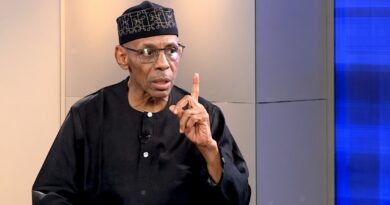
The Convener of the Tinubu Must Go (TMG) movement, A. A. Hikima, Esq., has issued a formal Freedom of Information request to the Kano State Police Command, demanding answers within seven days over the disruption of its lawful gathering held on Sunday, 11 October 2026.
In a letter dated 13 October 2026 and addressed to the Commissioner of Police, Kano State Police Command, Bompai, and signed by the Principal Counsel of A. A. Hikima & Co., the group accused the police of preventing a lawfully booked private event despite admitting the gathering was lawful.
According to the letter, the Commissioner in a subsequent interview with DCL admitted that the TMG gathering was lawful and required no police permission. He also confirmed he personally spoke with Hikima on the night preceding the programme, but never informed him that the programme had been prohibited.
“Yet, the following morning, the venue was surrounded by an extraordinary deployment of heavily armed police personnel, including mobile policemen, some masked, accompanied by more than ten operational vehicles and trucks,” the letter stated.
The Command had subsequently explained that the massive deployment was intended to protect the organisers.
The TMG convener said it is principally that explanation that requires clarification.
In the FOI request filed pursuant to the Freedom of Information Act, 2011, Hikima raised nine fundamental questions which the Police must answer:
The 9 Hard Questions:
1. What was the actual reason and justification for preventing the TMG gathering from taking place inside the privately booked venue?
2. What was the nature of the threat from which you stated that the Police were protecting us?
3. Who constituted that threat, and what steps did the Police take against those persons rather than against the intended victims of the threatened disruption?
4. Given the very substantial number of armed police personnel deployed, why was the Command unable or unwilling to secure the venue and allow the lawful gathering to proceed?
5. How does preventing participants from entering a secured private venue and consequently leaving them exposed on the streets constitute protection?
6. Why was tear gas deployed against some of the participants whom the Police Command says it had mobilised to protect?
7. Was the prevention of our gathering connected in any way with any instruction, policy or coordinated effort aimed at frustrating peaceful political activities by persons or organisations opposed to the present Federal Government?
8. Was the decision to prevent the gathering made solely by the Kano State Police Command, or did it originate from or involve any other authority?
9.Does the Kano State Police Command recognise our continuing constitutional right to hold subsequent peaceful TMG meetings and gatherings, and is the Command prepared to protect us in exercising those rights rather than prevent their exercise?
The letter noted that instead of securing the private event centre which had been lawfully booked and paid for, organisers and participants were prevented from entering, leaving a large number of people outside who eventually moved onto the streets.
“In other words, the purported protective measure appears to have produced precisely the opposite result: the persons supposedly being protected were removed from the relative safety of a private venue and exposed on the public road,” it added, noting that some participants were subsequently subjected to tear gas after some organisers had left.
The group said it is not seeking permission from the Police to hold subsequent lawful gatherings, but seeks a clear answer as to whether citizens opposed to the present administration can expect equal protection of the law under Sections 39, 40, 35 and 41 of the 1999 Constitution guaranteeing freedom of expression, peaceful assembly, personal liberty and freedom of movement.
7-Day Ultimatum And Warning of Criminal Liability
The lawyers invoked Sections 7(4) and 7(5) of the Freedom of Information Act, warning that failure to provide information within the period prescribed by the Act is treated as a refusal, and wrongful denial constitutes an offence liable on conviction to a fine of N500,000.
“As Commissioner of Police, whose statutory responsibilities include the prevention and detection of crime and the protection of lives and property, we naturally expect that you would be particularly mindful of your own obligation to comply with the law,” the letter said.
“For the avoidance of doubt, your position as Commissioner of Police does not confer immunity from investigation, prosecution or other lawful proceedings in respect of conduct constituting an offence under Nigerian law.”
The group reserved its right to invoke judicial remedies under the FOI Act and to submit formal petitions for investigation of any offence disclosed, including under the Penal Code, as well as seek declaratory, injunctive and compensatory reliefs for infringement of constitutional rights.
The letter concludes with a single fundamental question:
“If the Police came to protect us, why did their actions ultimately expose us to greater danger? Nigerians are watching. We demand an answer.”