Senate To INEC: Disqualify Any Candidate Whose Supporters Instigate Electoral Violence
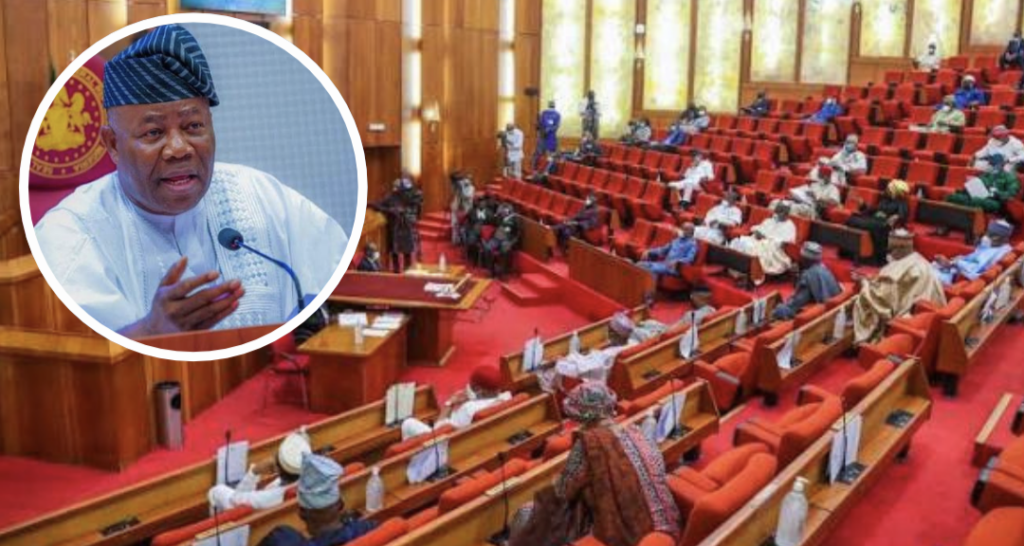
The Senate has asked the Independent National Electoral Commission, INEC, to disqualify any candidate whose supporters are found to have instigated or participated in acts of electoral violence, irrespective of party affiliation.
The Senate said this was in accordance with the provisions of the 2026 Electoral Act and an established conviction by the court.
The Senate also condemned in very strong terms the escalation in the frequency and spread of political violence across the country, characterised by attacks on political leaders, supporters and political gatherings, with grave implications for national security, democratic participation and the peaceful conduct of the 2027 general elections.
It equally asked governors to stop denying opposition parties access to public facilities, hotels and stadiums under their control for political activities.
The Senate urged security agencies to conduct impartial and transparent investigations into reported incidents of political violence in Abuja, Edo, Delta and Sokoto states, as well as other affected areas, identify the perpetrators and their sponsors and ensure prosecution.
Motion by Ningi
The resolutions were sequel to a motion sponsored by Senator Abdul Ningi, Bauchi Central, on the urgent need to check the rising incidence of violence, intolerance and attacks on political leaders and their supporters in the country.
Ningi’s motion came against the backdrop of recent attacks on political figures, including the incident involving President Bola Tinubu at a mosque in Abuja last Friday.
The Senate urged the Federal Government to direct the Inspector-General of Police and other relevant security agencies to strengthen security arrangements for political leaders, candidates, supporters and political gatherings nationwide, and establish effective early-warning and rapid-response mechanisms to prevent political violence, ahead of the 2027 elections.
The Senate also mandated its Committees on National Security and Intelligence; Police Affairs; and INEC to engage relevant institutions and report back within a week on measures to prevent political violence and safeguard the 2027 general elections.
Following an additional prayer by Senator Sampson Ekong, Akwa Ibom South, the Senate resolved that the Ministry of Information and the National Orientation Agency, NOA, should intensify public enlightenment campaigns against political violence.
Akpabio: INEC has right to disqualify
Speaking during discussions on the motion, the President of the Senate, Senator Godswill Akpabio, said: “Any candidate or supporter caught instigating violence, then INEC has a right to disqualify.
“We should call the attention of INEC to the 2026 Electoral Act. No matter the political party, such a candidate should immediately be disqualified. They are embedded in the 2026 Electoral Act and require strong implementation.”
Akpabio said: “Let us refer to the Electoral Act 2026. If you examine Sections 121 to 128, you will see that electoral offences and violence are clearly spelt out. These include intimidation, snatching of BVAS machines, ballot boxes and other electoral materials.
“We recommended penalties, ranging from 12 months to five years’ imprisonment, with no option of a fine for aggravated offences, such as stoning, beating with sticks or using other dangerous objects. That was what we recommended.
“Furthermore, under Section 92, we provided that INEC could suspend elections in areas where violence is reported and reschedule such elections within 24 hours.
“We also provided for the Electoral Offences Commission Bill 2025, which was passed alongside the Electoral Act, to establish a dedicated mechanism for addressing electoral offences, including vote-buying, electoral violence and attacks on INEC officials.”
Senators’ contributions
In his presentation, Senator Ningi listed the reported attack on the motorcade of President Bola Tinubu on Friday, November 13, 2026, shortly after he observed Jumu’ah prayers at the Shehu Shagari Central Mosque, Garki, Abuja; the reported attack on Mr. Peter Obi and other political stakeholders during a political gathering in Benue, Edo states; the violent disruption of a political procession involving supporters of the Nigeria Democratic Congress, NDC, and the Obidient Movement in Asaba, Delta State, on November 7, 2026, which reportedly resulted in one death and five injuries; and the reported attack on the convoy of African Democratic Congress, ADC, presidential candidate, former Vice President, Atiku Abubakar in Sokoto State.
Senator Binos Yaro, Adamawa South, moved an additional prayer urging state governors to ensure that rival political parties and candidates were not denied access to public facilities, including public arenas and hotels controlled by state governments.
Senator Ali Ndume, Borno South, proposed that during the campaign period, police and armed forces should prohibit the carrying of anything that could be considered a weapon, and that anybody caught carrying knives, sticks or other harmful objects during campaigns should be arrested immediately.
Ndume also proposed mobile courts to accompany campaign activities, so that anybody arrested for carrying dangerous weapons or engaging in violence is promptly prosecuted.
Senator Sumaila Kawu, Kano South, said: “It is a shame to see candidates contesting for the Senate, House of Representatives or governorship surrounded by supporters carrying dangerous weapons. Where are we going as lawmakers when we appear to encourage conduct that violates the laws we enacted?
“We must be honest with ourselves. How many of our supporters and young people follow us to political activities carrying weapons?”