Senator Shehu Sani Warns North Against Alienating Yoruba Allies, Urges Support for Tinubu’s 2 Term Or North Risks Total Isolation
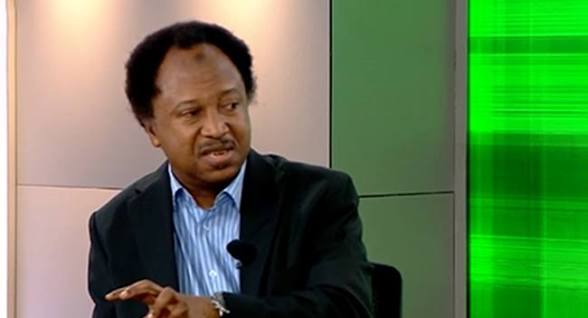
Former Senator representing Kaduna Central, Senator Shehu Sani, has warned Northern Nigeria against creating multiple political enemies at the same time, saying the region risks complete isolation if it breaks its historical alliance with the Yoruba of the South-West.
Sani gave the warning during an interview on ATP HAUSA, where he spoke extensively on power rotation, history, and the current political tension in the country.
He started by explaining the reality of Nigerian politics. According to him, no one can become President of Nigeria with only his ethnic group or only his religion. He said those who argued that the North should do eight years and then allow the South to do eight years did so based on historical justice.
He described the Yoruba as the closest ally of the Northern Hausa-Fulani Muslim, with strong historical bonds. Sani said Nigerians must not allow present-day politics to make them forget history. He recalled that in Kaduna, Sir Ahmadu Bello, the Sardauna of Sokoto, was killed, in Nigeria Sir Abubakar Tafawa Balewa was killed, and in 1966, Brigadier Zakariya Maimalari and other top Northern leaders were killed. He said the second group of leaders killed were top Yoruba leaders, and that it was the North and the Yoruba together with other ethnic groups that united to fight the civil war, save the country from collapse and restore its dignity internationally.
Sani questioned the logic of demanding eight years for the North and then refusing the same for others. Using the analogy of five fingers, he asked how the North, which he described as one finger representing Hausa-Fulani Muslims, can afford to be in conflict with other Northern minority ethnic groups in Plateau and Benue, be in conflict with the Igbos, be in conflict with the oil-producing South-South, and then add conflict with the Yorubas, and still expect to live in peace.
He said the North already has internal problems, with conflicts between Northern Muslims and people of Plateau and Benue. He added that there is great misunderstanding between Northern Muslims and the Igbos, and tension with the South-South who feel their oil wealth is taken to the North. He said the only solid alliance the North had outside was with the Yoruba, and it would be dangerous to provoke another crisis.
The former lawmaker said he is not stopping anyone from contesting for President, but in politics, when you already have many adversaries, you should not create more enemies for yourself. He said politicians should consolidate existing alliances to achieve their goals. He warned that the hate speech and hostile language being used today will be weaponized against Northern leaders when they eventually seek power.
Looking back at political history, Sani said in 2015, Muhammadu Buhari contested after three failed attempts. He had twice picked Igbo running mates, Chuba Okadigbo and Edwin Ume-Ezeoke, and in 2011 he picked Tunde Bakare, a Yoruba. He said it was only when Bola Tinubu came in and built a coalition that power was brought back to Northern Nigeria.
Sani said the best approach is patience. He urged Northerners to allow the current administration to complete its four-year term in peace. When asked to clarify if he meant they should be allowed to complete their term, he said yes, let them complete their four-year term. He warned that if anyone claims they are not qualified or tries to seize power by force, there will be no peace. He said he does not see how the North can be fighting the Igbos, fighting oil producers, fighting Yorubas, and fighting minority groups within the North and still expect stability.
He also spoke about President Tinubu facing hostility abroad because he was accused of supporting Northern Muslims. Sani contrasted political activism of his generation during military rule with what he sees today. He said during their time, if an economic issue was raised, they would study it deeply and engage in intellectual debate. If it was health or human rights, they would read thoroughly and debate with facts. He lamented that many youths today only resort to insults on social media because they lack the academic grounding to debate policies like those of the World Bank and IMF.
Sani further highlighted the North’s weak global media and diaspora presence. He swore that without Yoruba allies, the North cannot withstand Igbos on social media because they are stronger online. He claimed that in the United States, out of ten Nigerians, five are Igbo, four are Yoruba, and only one is a Northerner. In Europe, he said five are Yoruba, four are Igbo, and only one is Hausa. This, he said, is why when Nigeria was threatened with sanctions over alleged killings of Christians, those abroad pushed the narrative to damage the country’s image, while the North had no one in America or Europe to defend it.
He said the gap is also visible on social media. While 85 percent of Northern social media posts are written in Hausa, on X, formerly Twitter, which drives global political discourse, the entire North has no more than five influencers with over two to three million followers, while a single Yoruba influencer can have more followers than all five combined.