Who Is Justice Peter Lifu, The Judge Who Sacked ADC Leadership And Nullified Atiku’s Candidacy?
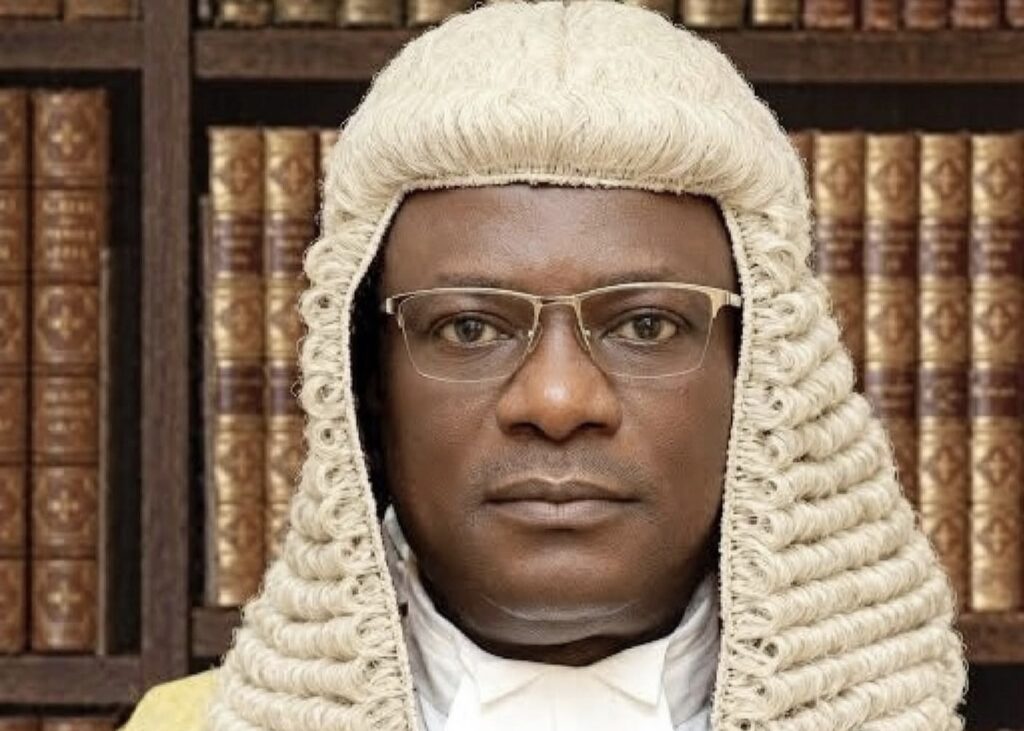
Justice Peter Odo Lifu is a judge at the Federal High Court in Abuja whose latest judgment has thrown the African Democratic Congress, ADC, and the 2027 presidential race into fresh controversy.
On Thursday, Justice Lifu nullified all the processes that led to the emergence of former Vice President Atiku Abubakar as ADC presidential candidate and voided the emergence of former Senate President David Mark, Rauf Aregbesola and others as national officers of the party.
The judge nullified all actions taken by the David Mark leadership, including the nominations of all ADC candidates contesting the 2027 general elections, for emerging from an “illegal and unlawful” leadership of the party.
He upheld the case of Nafiu Bala Gombe, a former Deputy National Chairman of the ADC, that the emergence of David Mark and Rauf Aregbesola as leaders of the party was unlawful.
Background
Justice Lifu was born in Okpoma, Yala Local Government Area of Cross River State.
Before he joined the federal bench, he obtained his Law degree from the University of Jos. He was called to the Nigerian Bar in 1990.
He also holds a Masters degree in Political Science and a Master of Laws, LL.M., from the University of Ibadan.
Before his judicial appointment, he practiced law in Ibadan and lectured at the Department of Public and International Law, University of Ibadan.
He has presided over several high-profile political and constitutional cases.
Justice Lifu frequently handles high-stakes political disputes, election matters, and regulatory cases.
Notable Judgments
Some of his notable judgments include the recent affirmation of the Senator Nenadi Usman-led caretaker committee as the legitimate leadership of the Labour Party.
Before issuing the court orders mandating the Independent National Electoral Commission, INEC, to deregister the ADC and four other political parties, he had earlier presided over multiple cases involving the Peoples Democratic Party, PDP.
One of them was issuing injunctions restraining the party from removing Umar Damagum as Acting National Chairman and stopping the PDP’s national convention.
Justice Lifu was also the judge who restricted INEC from releasing the voters’ register to the Rivers State Independent Electoral Commission, RSIEC, for the conduct of local government elections in the state.
The judge was also the one who dismissed the motion filed by a plaintiff identified as Johnmary Jideobi and cleared a former President of Nigeria, Goodluck Jonathan, to participate in the 2027 presidential race.
Controversy Over Previous Ruling
The Court of Appeal, Abuja Division, had on July 28 set aside a judgment by Justice Lifu that ordered deregistration of the ADC, Accord Party and three other political parties.
Justice Lifu had directed INEC to deregister the five political parties, which allegedly failed to meet the constitutional requirements needed to warrant their continued existence and participation in future elections.
The ruling also barred INEC from according further recognition to the parties, accepting nominations of candidates from the affected parties, or giving effect to their activities for purposes of participating in the 2027 general elections.
Justice Lifu had ruled that he found merit in the suit filed by the National Forum of Former Legislators, NFFL.
The NFFL claimed that the five political parties listed as defendants had persistently failed to meet the constitutional benchmarks required to retain their registration.
The former legislators stressed that the requirements include winning at least 25 per cent of the votes in a state during a presidential election, or securing at least one elective seat at the national, state, or local government level.
They told the court that the ADC and the four other parties had performed poorly in both the 2023 general elections and the by-elections conducted by INEC, thereby failing to win seats across key tiers of government.
The litigants maintained that the continued existence of the ADC and the other defendants as recognised political parties was unlawful and undermined the integrity of the country’s electoral system.
The Attorney General of the Federation and Minister of Justice, Prince Lateef Fagbemi, SAN, who was also a defendant in the matter, threw his weight behind the plaintiffs.
The AGF argued that the continued existence of the said political parties violated extant provisions of the 1999 Constitution, as amended, and ultimately undermined the nation’s electoral integrity.
However, dissatisfied with the trial court’s verdict, all the defendants, including INEC, urged the appellate court to set it aside.
The appellate court subsequently ordered a stay of execution of the Federal High Court judgment, while slamming the trial judge for disregarding the judicial hierarchy.
The panel berated Justice Lifu for disobeying an order it had made on May 22, directing him to stay proceedings in the case pending the outcome of an appeal by the parties.
The appellate court, while describing the judgment “a nullity,” held that “what the learned trial court did amount to judicial impertinence or what the Supreme Court called judicial insubordination.”
The three-man panel of the appellate court presided over by Justice Abba Mohammed, in a unanimous decision, held that the trial court had no judicial power to hear the case initially.
Following his orders and judgments, various groups and individuals had earlier filed a series of petitions against the judge.
The leadership of the ADC had earlier petitioned the National Judicial Council, NJC, over alleged bias against the Judge.