You Can Call Me Whatever You Want, I’m Making Africa Great — Dangote Fires Back At Monopoly Critics
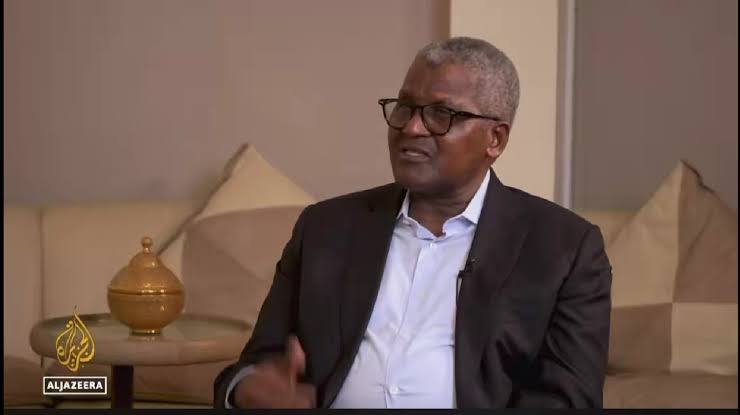
Africa’s richest man and President of Dangote Group, Aliko Dangote, has fired back at those accusing him of running a monopoly, saying he must keep his eyes on the ball like Lionel Messi and will not be distracted by crowd noise.
Dangote said being called a monopoly will not stop him from his mission to industrialise Africa, insisting that the field is open for anyone willing to work.
Speaking in a fiery interview on Al Jazeera’s Talk to Al Jazeera, Dangote dismissed persistent accusations that his conglomerate stifles competition across key sectors in Africa.
When asked by Al Jazeera correspondent, Ahmed Idris, how he reacts to people accusing him of trying to be a monopoly, Dangote used a football analogy to explain his focus.
“Have you ever seen a footballer looking at the audience? He has to continue looking at the ball. If I am, Messi, for example, and kicking the ball and I am looking at the audience looking or hailing me, do you think I won’t miss the ball? I will miss the ball,” Dangote said.
He said it is impossible to please everybody in business, especially when pursuing large-scale development for the continent.
“Those people, no matter what you do, you won’t make everybody happy. So if I am going to make my continent great and people want to call me monopoly for no reason, so be it. I mean, it’s not going to reduce the color of my face or whatever. You can call me whatever that you want to call me,” he stated.
Dangote argued that his dominance in cement, sugar, fertilizer and petroleum refining is as a result of taking opportunities that are open to all, not blocking others.
“I didn’t stop anybody. It is an opportunity given to everybody. Every one of us has that opportunity, whether African, foreigners, or whatever. If they’re sitting on the bench, I’m on the track, why should I bother about them?” he queried.
The Dangote Group maintains significant market control in cement manufacturing, sugar refining, fertilizer production and petroleum refining across Africa — a dominance that continues to draw both acclaim for local capacity building and scrutiny over market competition.