BRICS Summit: Iran, UAE Set Aside Rivalry To Sign Joint Declaration On Middle East War In New Delhi
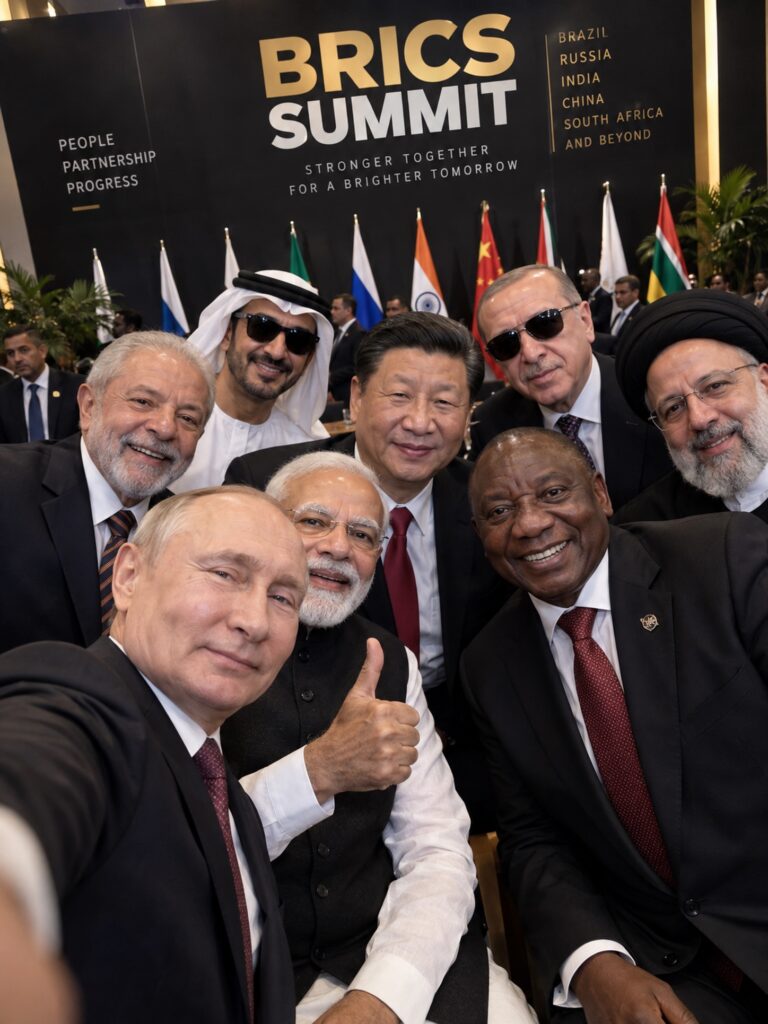
BRICS Summit: Iran, UAE Set Aside Rivalry To Sign Joint Declaration On Middle East War In New Delhi
Iran and the United Arab Emirates, UAE, have set aside their rivalry to sign a joint declaration on the Middle East war at the ongoing BRICS Leaders’ Summit in New Delhi.
The two countries, divided by the six-month-old conflict, signed up to the joint BRICS statement on Saturday that called for restraint, in what diplomats described as a sign of diplomatic progress.
According to Reuters, Iranian President Masoud Pezeshkian also met with the Crown Prince of Abu Dhabi, Sheikh Khaled bin Mohamed bin Zayed Al Nahyan, on the sidelines of the summit — the highest-level meeting between the two countries since the war started.
The BRICS joint declaration expressed “deep concern over the continued escalation of tensions in Middle East/West Asia” and called “for exercising maximum restraint, as well as avoiding actions that could further aggravate the situation.”
The bloc further called for protection of civilians, respect for sovereignty and territorial integrity of states, and stressed the need to protect global trade, supply chains, energy flows and maritime security.
The meeting between Pezeshkian and Sheikh Khaled comes after months of tit-for-tat strikes, including Iran’s late August attack on Al Minhad Air Base in the UAE which houses US forces.
Host, Indian Prime Minister Narendra Modi, said the BRICS bloc — originally formed in 2009 by Brazil, Russia, India, China and South Africa and now expanded to include Egypt, Ethiopia, Indonesia, Iran and UAE — has come of age and must translate its unity and consensus into concrete results on the global stage.
Chinese President Xi Jinping said BRICS countries should firmly stand on the right side of history and steer international order toward greater equity and justice, adding that China is ready to play its due role in achieving a permanent and comprehensive ceasefire in the Middle East.
Other leaders at the summit include Russia’s Vladimir Putin and South Africa’s Cyril Ramaphosa.
Foreign policy experts said getting a language acceptable to both Tehran and Abu Dhabi was the key test for the bloc, noting that while the declaration may not immediately change the situation on the ground, it demonstrates unity among emerging economies seeking to influence global rules and reform institutions like the World Bank, IMF and WTO.